Skip to content
Gradient Numerics
EN, Choose language
Send your geometry

CFD for hardware teams

Wind-tunnel answers, before you book the tunnel.

We simulate your design and tell you how far to trust the result. On the DARPA SUBOFF submarine, we landed within 2.2% of the towing tank.

Send your geometry

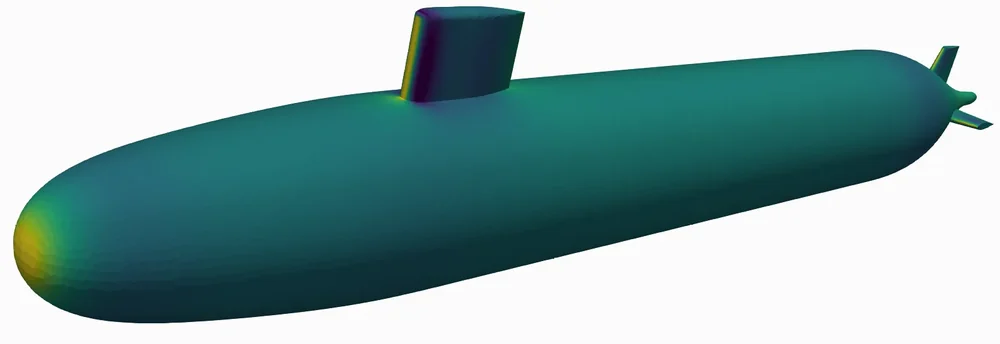
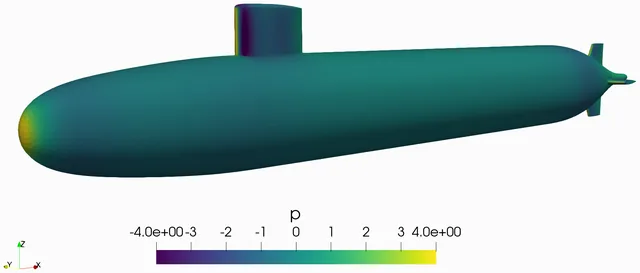
DARPA SUBOFF hull in three-quarter view, colored by computed pressure: yellow at the bow, where the water stagnates.
DARPA SUBOFF, pressure computed with OpenFOAM 13.

01The problem

Engineers have a nickname for CFD: Colorful Fluid Dynamics.

The pictures look great. Almost nobody says how right they are. So before a decision, teams go back to the wind tunnel, with a model to build and a date to wait for.

02What we do differently

“Essentially, all models are wrong, but some are useful.”

George E. P. Box, statistician, 1987

Next to every result, we write how wrong it is.

We measure that on a case like yours, against real test data, before we deliver. Of the 40 direct competitors we studied, none publishes it.

03The proof

We were off by 2.2%.

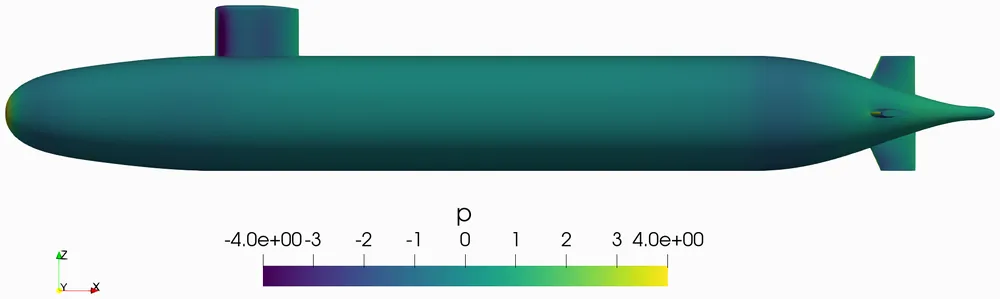
DARPA SUBOFF submarine, drag at 5.93 knots.

The same hull from the side, colored by pressure: peak at the bow, rudder wake at the stern.
Towing tank
102.6 N
Our simulation
104.9 N
Error
2.2%

Half a million cells. Seven minutes of solver time on a laptop, thirty minutes with setup.

Tank data: Liu and Huang, 1998

04What we simulate

There’s no wind in a CAD file.

Fluid dynamics

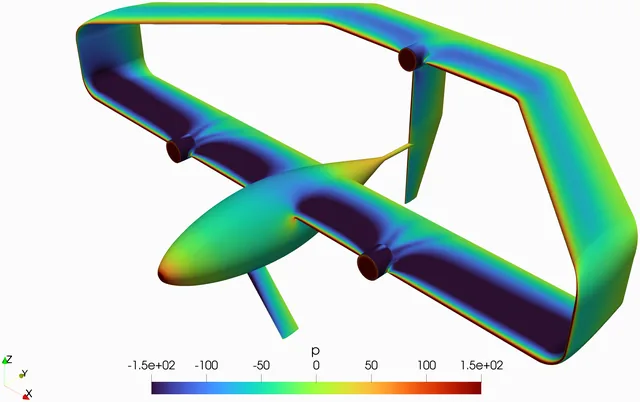
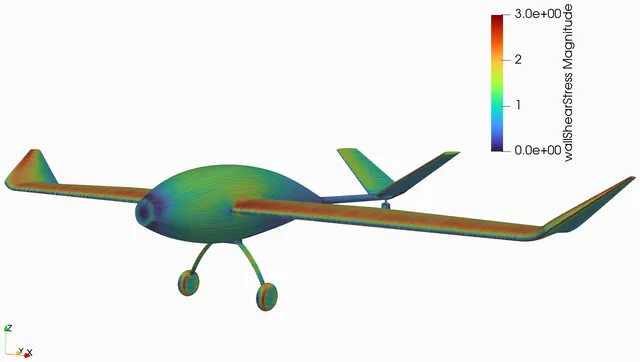
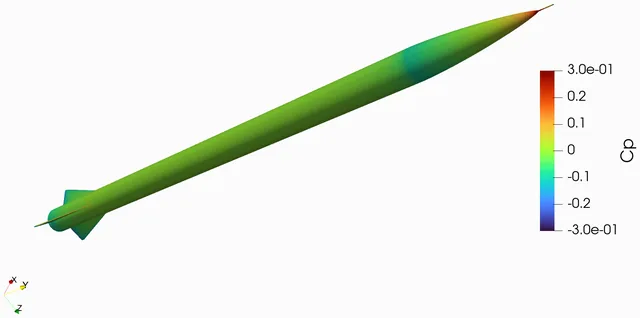
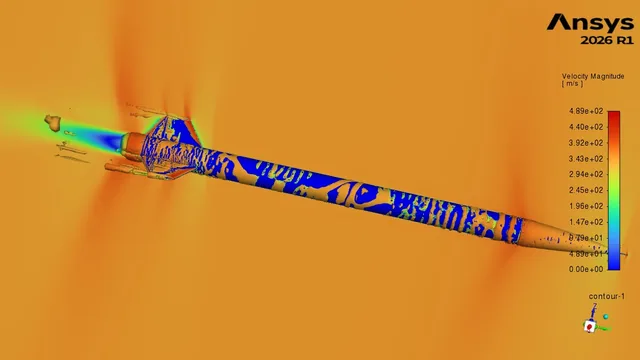
Drag, lift, flow through and around the part. Supersonic too.

Aeroacoustics

The noise the flow makes on its own, in jets and wakes.

Conjugate heat transfer

How heat moves between a fluid and a solid. Electronics cooling, for example.

OpenFOAM 13 · SU2 · Ansys Fluent · ParaView

06Why now

Certification by analysis now has a roadmap.

In 2021, engineers from Boeing, Pratt & Whitney and Stanford wrote it for NASA: aircraft and engines certified partly through simulation, with fewer flight and ground tests. One of the conditions is that every simulation states how reliable it is.

Meanwhile, open-source solvers like OpenFOAM and SU2 run on a laptop.

The guide: Mauery et al., NASA/CR-20210015404

07How it works

You get the price in our first reply.

  1. Today

    Send us the CAD and the decision you have to make.

  2. About a day later

    We reply in writing: whether it can be simulated, the expected error and the price. If it can’t, we tell you why.

  3. One to three weeks

    You get the result, its error against the measurement and the full setup to rerun it.

Larger test matrices, or CFD hours every month: quoted in the same reply.

08Where we’re going

A library of validated cases. SUBOFF is the first.

Every job we close leaves a case behind: geometry, setup, error against the measurement. The next similar project starts from a method that has already been checked.

  1. 001DARPA SUBOFF, drag at 5.93 knots2.2%
  2. 002Your project

09Team

The names behind the numbers.

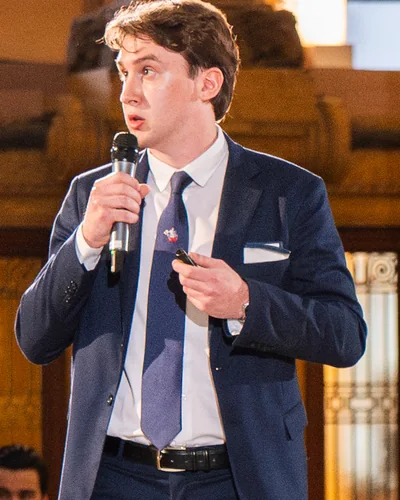
Sebastiano Raggi speaking at Palazzo della Borsa

Sebastiano Raggi

Mechanical engineer. Signs off on every simulation.

Research in computational aeroacoustics at the University of Genoa. Co-author of a 2025 study on optimal aerospike design. Led his team at the IMechE UAS Challenge: 6th of 42 in 2025, 4th of 54 in 2026.
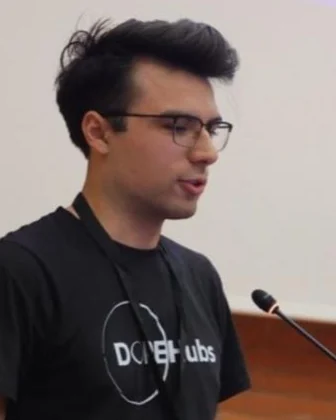
Edoardo Maestri giving a talk

Edoardo Maestri

Master’s student in aeronautical engineering.

Thesis on drag reduction with riblet surfaces, with experiments at the PRISME lab in France. Leads the team building a rocket for EuRoC, the European Rocketry Challenge.

10Send your geometry

Better wrong today than after the mold.

If simulation can’t answer your question, we’ll tell you. It costs nothing.

STEP, IGES, STL or Parasolid up to 200 MB, or a link in your question.

Gradient Numerics is a project of Firmamento Technologies Società Cooperativa, Via Brigata Liguria 105R, 16121 Genova, Italy · REA GE-528629 · Tax code and VAT no. 03038500991 · PEC firmamentotechnologies@pec.it · Privacy